


The U.S. Departments of Labor, Commerce, and Education recently published “America’s Talent Strategy: Building the Workforce for the Golden Age,” outlining a strategy for federal workforce development reform. Digital NEST, with 10+ years of results for youth in under-resourced California communities, stands ready to support this strategy and scale our impact.
The report highlights the need to train workers in new and emerging technologies, streamline existing workforce development systems, and create pathways for workers outside of four-year degree programs. It proposes 5 strategic actions to address these challenges:
- Industry-Driven Strategies: Align workforce development programs with employer needs through high-quality work-based learning models.
- Worker Mobility: Connect workers to high-paying jobs and career paths using AI-powered tools and competency-based assessments.
- Integrated Systems: Streamline program administration and governance requirements to empower states to integrate disparate funding streams and improve service delivery.
- Accountability: Link investments to outcomes and program performance so funding goes to effective programs.
- Flexibility & Innovation: Emphasize the speed and scale of AI-driven economic transformation; prioritize AI literacy and skills development.
These initiatives are consistent with Digital NEST’s proven model for workforce development.
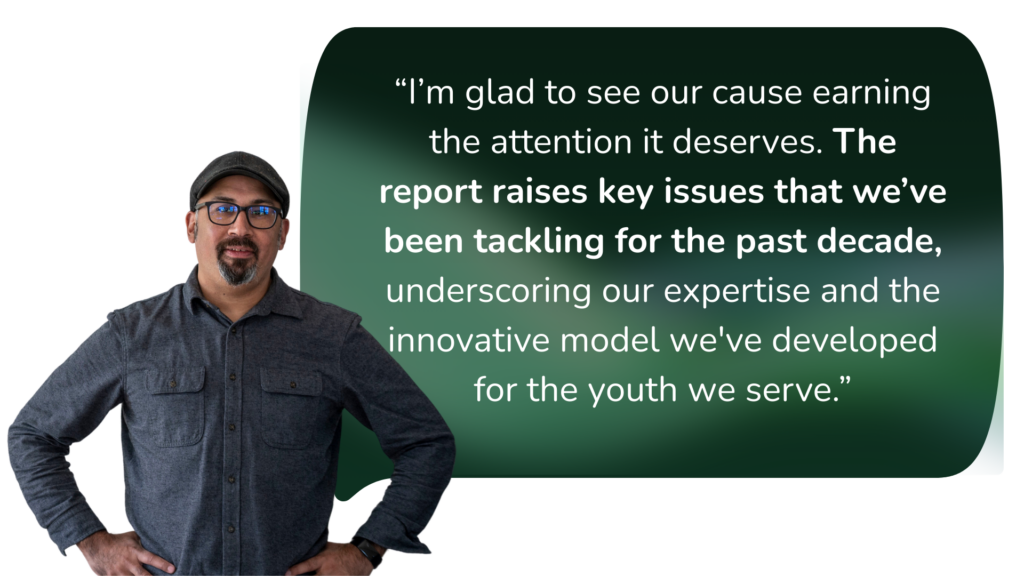
The Case for Abundant Career Pathways
The America’s Talent Strategy report highlights a crucial and widely accepted need: creating routes to high-paying careers for all youth. We know that the while college is an important part of some career pathways, it isn’t a one-size-fits-all solution.
Early exposure to career exploration and technical skills, combined with opportunities to engage in debt-free apprenticeships and internships, is essential for connecting promising talent with real-world training and high-paying jobs. This strategy is a win-win: it provides workers with valuable, tangible skills and offers companies a pipeline of motivated, well-prepared talent.
“We’ve seen first-hand the success of the ‘earn-and-learn’ model through bizzNEST,” said Jill Denner, Chief Impact Officer at Digital NEST. “We are fortunate to have strong partnerships with companies that provide opportunities for our members to gain real-world experience that builds their confidence, professional and technical skills, and helps them compete for jobs.”
Understanding the Report’s Implications
While the report makes clear that the success of America’s workforce depends on the impact and accountability of our workforce system, it leaves out some important considerations.
The report does not leverage the key role played by non-profit organizations like Digital NEST in closing the gap between traditional education and the modern workforce.
“At the NEST, we work directly with schools to provide students with early exposure to real-world career opportunities and with employers to understand their talent needs,” said Denner. “We bring together the supply of talent with the demand for specific skills. And we can be agile and responsive to rapidly changing industry needs.”
The report also doesn’t build on the decades of federally-funded work by educators, non-profits, and researchers to advance tech literacy in our nation’s youth. We encourage the administration to leverage the same tools, strategies, and lessons learned that informed the NEST’s early development as they could increase the efficiency of this next phase of workforce development.
Finally, the report does not disclose a funding mechanism for its proposed reforms. Without proper funding, even the most innovative strategies for workforce reform will struggle to scale and create meaningful change. And enforcing accountability through metrics requires an investment that is sustained over time.
Digital NEST relies on a mix of grants, philanthropic donations, and corporate partnerships to fund our programs. This gives us the flexibility to adapt to emerging technologies, pilot innovative programs, such as those focusing on AI skills, and measure member progress.
The Digital NEST Blueprint
At Digital NEST, we are opening direct pathways from under-resourced California communities to jobs in tech and high-growth industries. We do this by:
- Complementing Classroom Learning: We partner with schools and community colleges to provide students with early professional experiences.
- Prioritizing Innovation: We’ve integrated ethical AI policies and practices and are piloting internal projects to boost AI skills development for youth and staff.
- Building Effective Employer Partnerships: We align curriculum and opportunities to employer partners that offer our youth access to high-demand careers.
Digital NEST is a blueprint for innovative, future-proof workforce development, delivering many of these results today. Our work is possible thanks to the generosity of donors and foundations aligned with our impact. Support the sustainability of our work at www.digitalNEST.org/donations.