
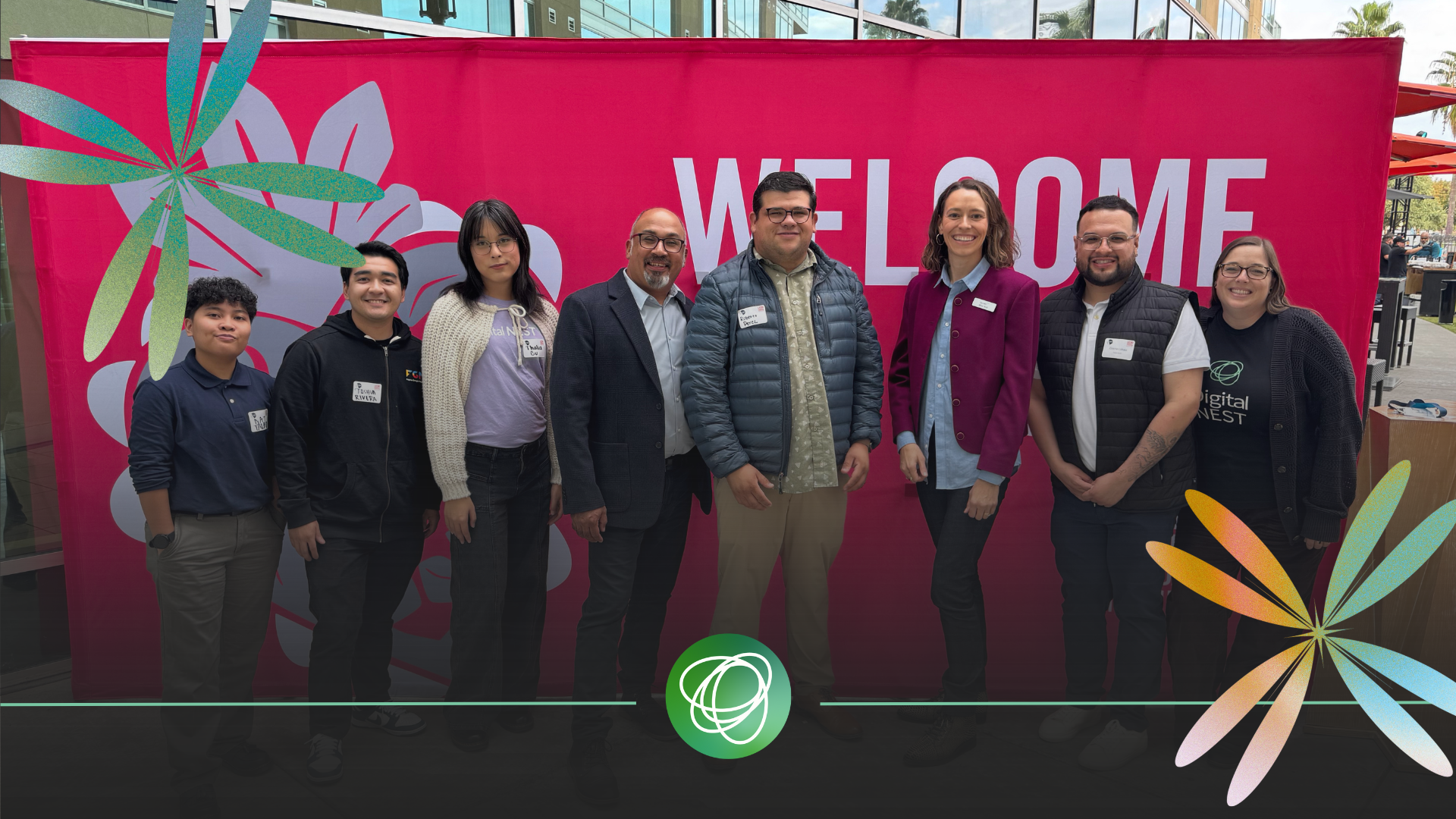

Last week, leaders in business, community, policy, and philanthropy convened in Stockton for the California Economic Summit, hosted by CA FWD. The 3-day conference offered a crucial moment of clarity on the state’s economic future.
Amid California’s global pre-eminence in innovation, conversations focused candidly on its widening wealth gap and the urgent need to build an economy defined by resilience, inclusivity, and sustainability. The core message was clear: maintaining the state’s economic edge requires new infrastructure and strategic investments that empower historically overlooked communities.
Addressing the Economic Paradox
Many speakers acknowledged the inherent paradox of a state that leads the world in wealth creation and innovation yet faces a widening income gap and affordability crisis. A few statistics that stood out:
- California boasts the world’s 4th largest economy with $4.2 trillion GDP.
- California is tied with Louisiana for the highest poverty rate in the nation at 17.7%.
- The top 2% of people in California hold approximately 20% of the state’s wealth.
- California’s income gap grew 20% from 2013 to 2023.
In the face of systemic economic headwinds, achieving shared prosperity demands a renewed focus on local civic infrastructure: the resources and networks that foster agency and connect communities to opportunity.
Speaker Felicia J. Wong, President and CEO of the Roosevelt Institute, said: “economic development has to come from where people live.”
Speaker Dee Dee Myers, Director of the Governor’s Office of Business and Economic Development (GO-Biz), said: “a bottom-up, community-driven approach to economic development can build on local strengths, drive innovation and guarantee every region across the state has the opportunity to thrive.”
In a fireside chat, Governor Gavin Newsom discussed the California Jobs First Economic Blueprint, which calls for deliberate investment in historically disinvested communities to create “high road” employment.
A Blueprint for Homegrown Prosperity
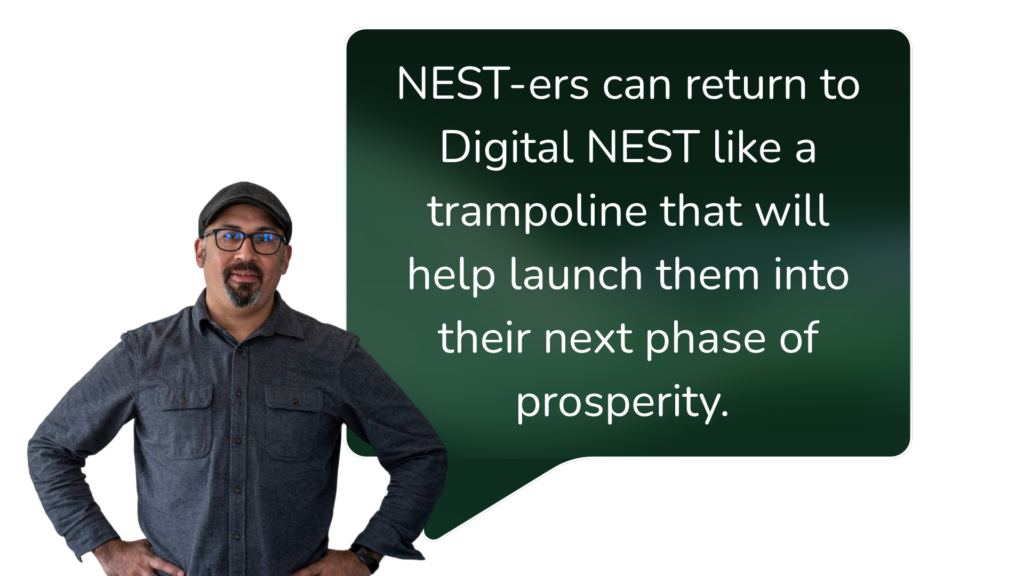
Speaker Natalie Foster, president and co-founder of the Economic Security Project, reimagined the notion of a “safety net” as a “trampoline,” which provides the momentum and risk capital necessary for democratized access to economic mobility.
Digital NEST embodies this metaphor. We operate as critical infrastructure for youth from communities that have been economically impacted by Silicon Valley, but not invested in.
Digital NEST invests in young people the way Silicon Valley invests in its own employees: by providing innovative facilities, state-of-the-art technology, and dedicated access to the professional networks and mentorship that have historically been out of reach.
Jacob Martinez, Digital NEST founder and CEO, spoke of our model and impact at El Poder Latino 2025, a welcome reception hosted by the Latino Community Foundation:
Martín Vargas-Vega, who grew up picking strawberries in the fields with his parents, became one of Digital NEST’s first members in 2014. We connected Martín to an internship with Tom Chavez at super{set}, launching a six-figure software development career. Martín paid his experience forward by referring three other NEST members to full-time jobs. One day, while commuting to the Bay Area, the group realized they collectively earned over half a million dollars in salaries, money that is now being reinvested directly back into their hometowns of Watsonville and Salinas.
In just one generation, Martin built a legacy of generational wealth for himself, his family, and his community.
Securing California’s Future
In his remarks, Attorney General Rob Bonta called for an economy that is sustainable, resilient, and inclusive. Digital NEST’s impact achieves all three:
- Inclusivity: We directly connect young people from underserved agricultural regions to high-value careers. These are diverse communities in small cities with large Latinx populations under 25.
- Resilience: We strengthen regional economies against external shocks by building strong, local talent pools committed to reinvesting in their hometowns.
- Sustainability: We foster an organic, regenerative model of growth driven by local talent and networks.
The path to a shared prosperity requires proven civic infrastructure by and for the communities it serves. Every day, with every young person that walks through the door of one of our centers, we’re reminded that our communities are not just beneficiaries of the digital economy, but its most critical drivers.
Please support our work in building a more inclusive, resilient, and sustainable California economy. At Digital NEST, 83% percent of all funding goes directly to programs. Donate today at www.digitalnest.org/donations.